
Three AC quotes: 16 SEER ($4,200), 20 SEER ($5,800), 24 SEER2 ($4,600). Which one makes sense?
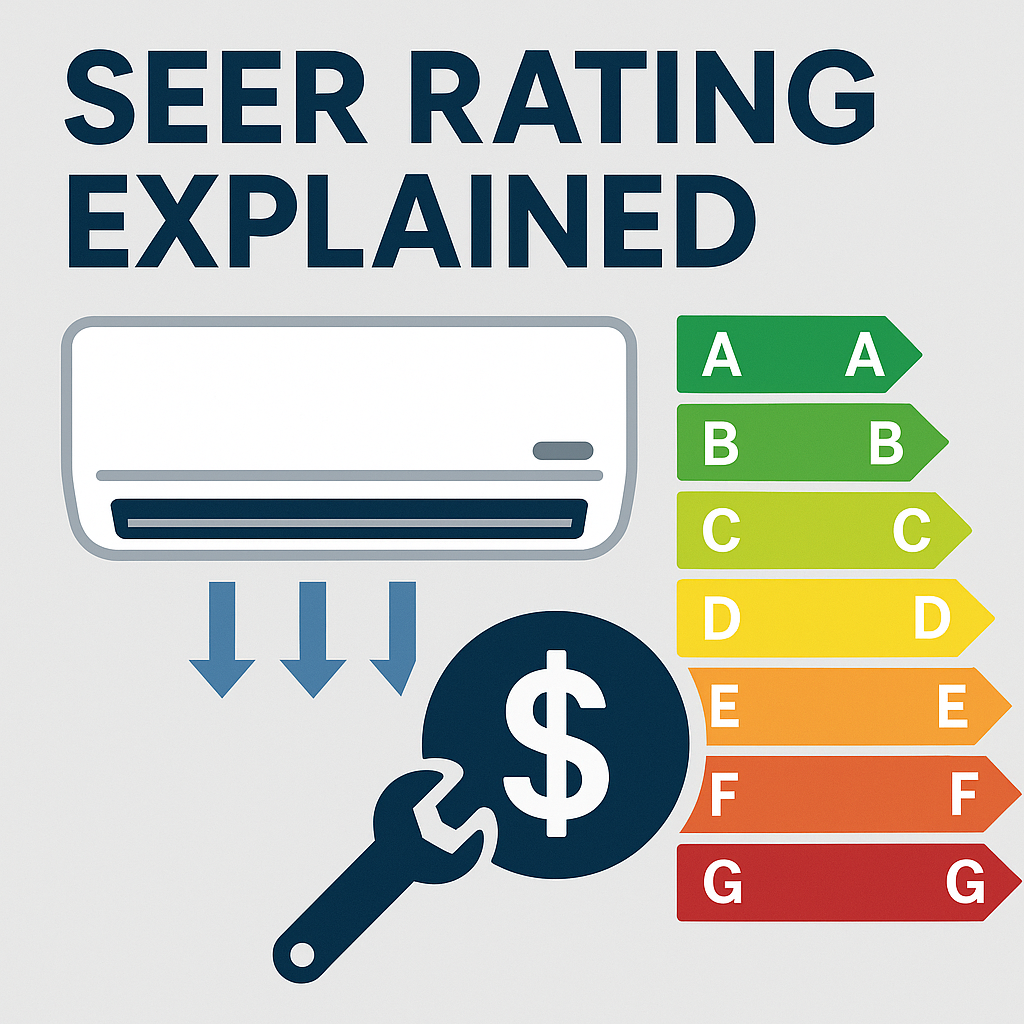
Think of SEER like MPG for air conditioners. The 24 SEER system uses 40% less electricity than the 16 SEER one. Over 15-20 years, that's $1,350+ in savings—plus rebates that often make high-SEER systems cheaper upfront.
Here's everything you need to know about SEER ratings, with zero technical jargon.
What is SEER? (5-Second Explanation)
SEER = Seasonal Energy Efficiency Ratio
The formula: Total Cooling (BTU) ÷ Electricity Used (Watt-hours)
In English: Higher SEER = Less electricity = Lower bills
Car analogy: SEER is like MPG. A 24 SEER system is like getting 35 MPG instead of 20 MPG.
SEER vs SEER2: What Changed in 2023
Old SEER (pre-2023): Tested under easy lab conditions. Overstated real-world performance.
New SEER2 (2023+): Tested under realistic conditions. More accurate.
Conversion: SEER2 is ~4-5% lower than old SEER
- Old SEER 20 = New SEER2 19
- Old SEER 22 = New SEER2 21
- Old SEER 24 = New SEER2 23
Important: Always compare apples-to-apples. Don't mix SEER and SEER2 numbers. All Zone systems use SEER2 ratings.
SEER Rating Tiers (What They Mean)
| SEER2 Rating | Performance Level | Best For | Rebate Eligible? | |--------------|-------------------|----------|------------------| | 13-15 | Minimum/Basic | Budget-only decisions | ❌ No | | 16-18 | Good | Standard replacements | ✅ Some | | 19-21 | High-Efficiency | Energy Star, tax credits | ✅ Yes | | 22-24 | Premium (Zone) | Maximum savings | ✅ Yes + More | | 25+ | Ultra | Rare/expensive | ✅ Yes |
Federal minimum: 13.4 SEER2 (split systems) Mini-splits: No federal minimum (most start at 16-18 SEER2)
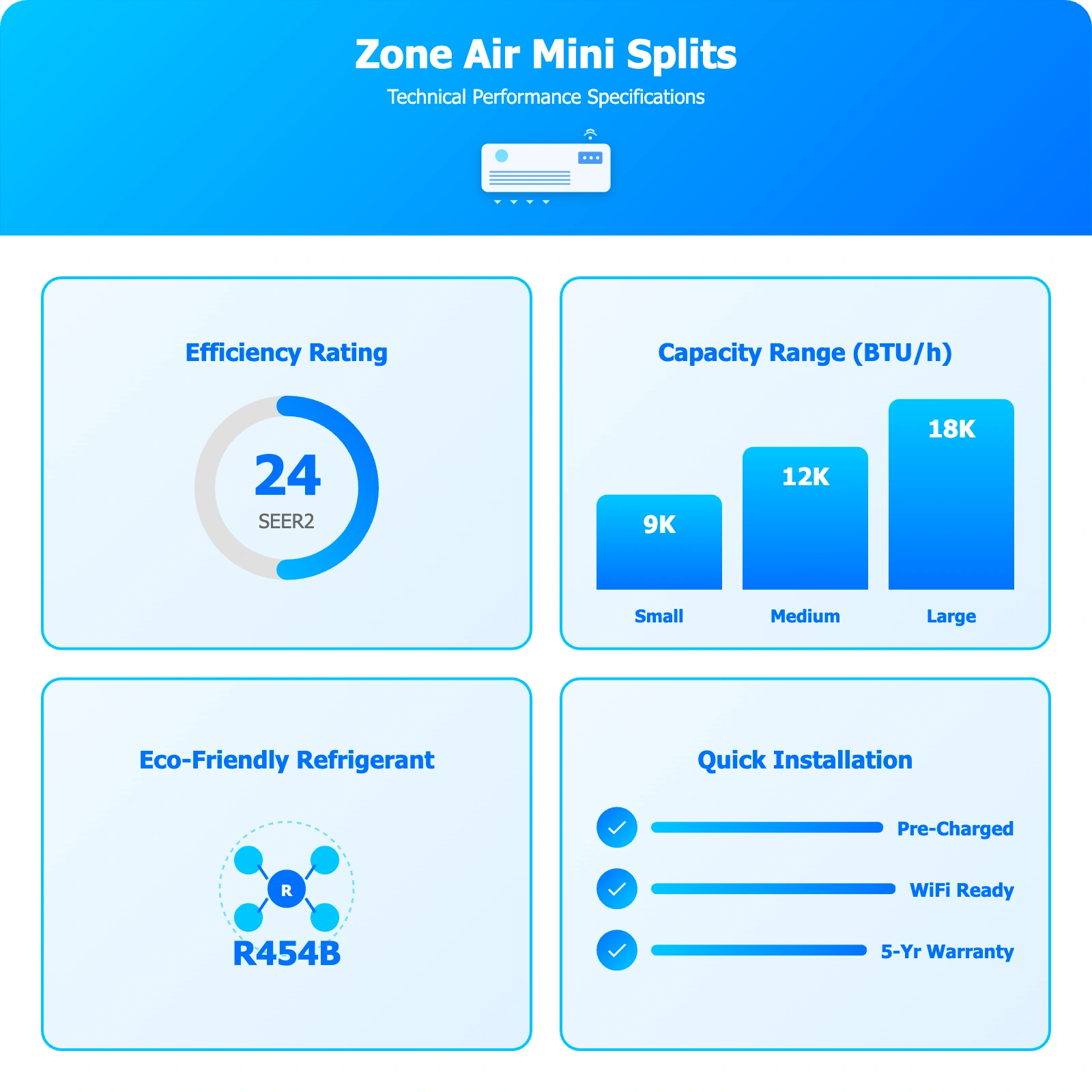
Zone DIY Series: All models are 22-24 SEER2 (premium tier)
Real Cost Comparison (12K BTU, 8 hrs/day, 6 months)
| SEER2 | Annual Cost | 15-Year Cost | Savings vs 14 SEER2 | |-------|-------------|--------------|---------------------| | 14 | $216/yr | $3,240 | Baseline | | 18 | $168/yr | $2,520 | $720 | | 22 (Zone) | $137/yr | $2,055 | $1,185 | | 24 (Zone) | $126/yr | $1,890 | $1,350 |
Based on $0.14/kWh national average
Is Higher SEER Worth It? (With Rebates, YES!)
Example: 18 SEER2 ($3,500) vs 24 SEER2 ($4,200)
Without rebates:
- Price difference: $700
- Annual savings: $42/year
- Break-even: 16.7 years ❌
With rebates:
- Federal tax credit: -$500
- Utility rebates: -$200 to -$500
- Actual price difference: $0-$200
- Break-even: 0-4.8 years ✅
Bottom line: High-SEER systems often cost LESS after rebates and pay for themselves in under 5 years.
SEER2 vs EER: Quick Differences
| Rating | What It Measures | Best For | |--------|------------------|----------| | SEER2 | Seasonal average (65-104°F) | Estimating annual costs | | EER | Peak performance (95°F) | Extreme heat climates |
Example: System with 24 SEER2 + 14 EER
- Great seasonal efficiency
- Moderate peak performance
- Fine for most climates, not ideal for Phoenix/Vegas
If you live in extreme heat: Look for high SEER2 AND high EER.
HSPF2: Heating Efficiency Rating
HSPF2 = Heating Seasonal Performance Factor 2 (for heat pumps)
| HSPF2 | Performance | Annual Cost | 15-Year Cost | |-------|-------------|-------------|--------------| | 8 | Minimum | $450/yr | $6,750 | | 10 (Zone) | Good-Excellent | $360/yr | $5,400 |
Savings: $1,350 over 15 years with Zone's 10 HSPF2 vs budget 8 HSPF2.
Combined savings: $2,500-$3,000 total (cooling + heating) over 15 years.
What SEER Rating Do You Actually Need?
| Your Situation | Recommended SEER2 | |----------------|-------------------| | Hot climate (7+ months AC) | 22-24 (max savings) | | Moderate climate (4-6 months) | 18-22 (sweet spot) | | Cold climate (<3 months) | 16-18 (prioritize HSPF2) | | Year-round daily use | 22-24+ (fastest payback) | | Vacation home/light use | 16-18 (lower upfront cost) |
4 Things That Kill Your Real-World Efficiency
- Wrong size: Oversized = short-cycling. Undersized = can't keep up. Use Manual J or sizing calculator.
- Poor installation: Leaky lines = 10-30% efficiency loss. Zone pre-charged linesets solve this.
- Dirty filters: 5-15% efficiency loss. Clean monthly.
- Bad thermostat settings: Set to 78°F vs 72°F = 18% savings.
Certifications That Matter
Energy Star 2023 Requirements:
- Split systems: 15 SEER2 + 12.5 EER2
- Mini-splits: 19 SEER2 (cooling) or 19 SEER2 + 9.5 HSPF2 (heat pumps)
NEEP Cold Climate:
- Maintains 70% heating at 5°F
- Operates to -5°F (or -15°F for higher tiers)
- Zone certified to -13°F
Why it matters: Federal tax credits ($2,000), utility rebates, verified performance, better resale value.
Common SEER Myths (Debunked)
❌ "Higher SEER always costs more" → Zone 24 SEER2 costs less than competitors' 18 SEER2 ❌ "Doubling SEER cuts bill in half" → 16→24 SEER2 = 30-35% savings, not 50% ❌ "SEER doesn't matter for mini-splits" → Still uses electricity. Higher = lower bills ❌ "Need max SEER everywhere" → Cold climates: prioritize HSPF2 over SEER2 ❌ "Manufacturers fake SEER ratings" → Independently verified by AHRI
FAQ: SEER Ratings
What's a good SEER2 rating? 18-22 SEER2 for most. 22-24 for hot climates. 16-18 for cold climates (prioritize HSPF2).
How much does SEER affect my bill? 24 SEER2 uses 40% less electricity than 14 SEER2. Saves $80-90/year, or $1,200-$1,350 over 15 years.
SEER vs SEER2 difference? SEER2 (2023+) tests under realistic conditions. ~5% lower than old SEER. SEER 20 ≈ SEER2 19.
Is 16 SEER2 enough? Works for short cooling seasons. But 20-24 SEER2 often costs the same after rebates and saves $40-80/year.
Do high-SEER units last longer? Yes. Variable-speed compressors = less cycling = less wear. 15-20 years vs 10-15 years for budget units.
What SEER qualifies for tax credits? Heat pumps: 16+ SEER2. ACs: 17+ SEER2 + 12+ EER2. Zone systems all qualify.
Is 24 SEER2 worth it over 18? With rebates, price difference drops to $0-$200. Immediate payback. Zone 24 SEER2 costs less than competitors' 18 SEER2.
Bottom Line
Difference between 14 SEER2 and 24 SEER2: $90/year = $1,350 over 15 years.
With rebates: High-SEER often costs LESS total than budget models.
Our recommendations:
- Hot climates: 22-24 SEER2
- Moderate climates: 18-22 SEER2
- Cold climates: 16-18 SEER2 (prioritize HSPF2)
Browse Zone 22-24 SEER2 systems | Sizing calculator
Related: Cost Guide | Sizing Guide | Tax Credits